
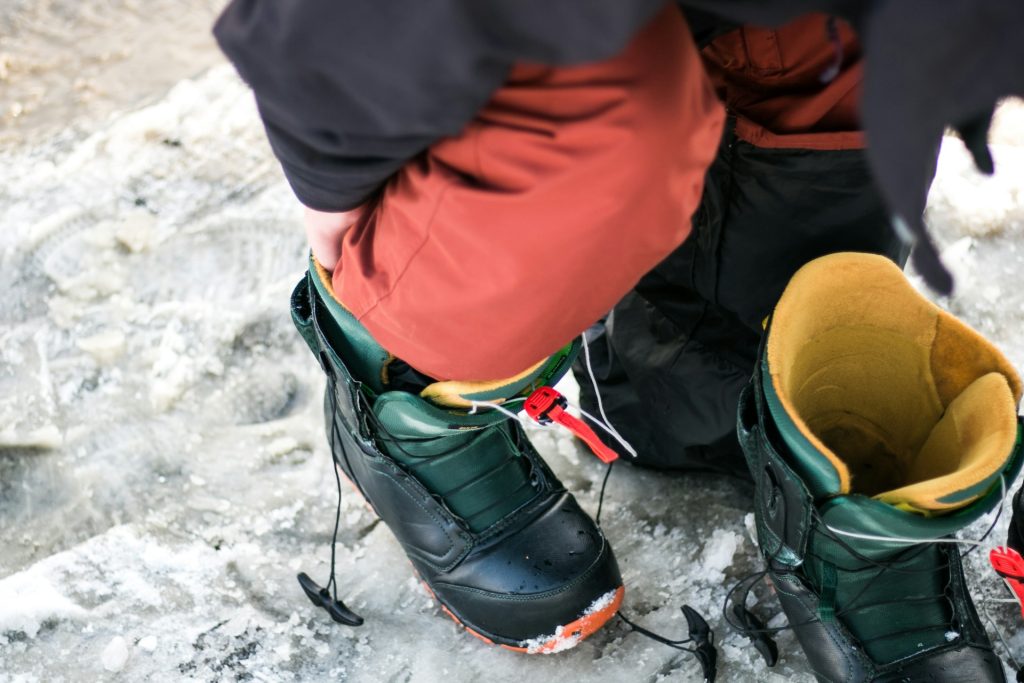
Let’s talk snowboard boots—specifically, flex. It’s one of those things that sounds technical and boring until you realize it can totally change how your board feels under your feet. Too soft and you’re flopping around. Too stiff and you’re riding in ankle shackles. Get it right though? The holy grail.
This guide breaks down what snowboard boot flex actually means, how it affects fit and feel, and how to pick the right one based on how (and where) you ride. Let’s get into it.
TL;DR
Beginners and park rats? Go soft. Speed demons and hard carvers? Go stiffer. Most riders land somewhere in the middle. Flex affects comfort, control, and how much your boots fight (or help) you on the mountain—so don’t just follow trends, match it to your style.
Why Boot Flex Actually Matters
Boot flex is more than just stiffness—it's about how your boots let you move (or not). It changes how you turn, land, carve, and how long your feet stay happy. Get the flex wrong and you’ll feel it in your calves, your control, and your confidence.
- ✅ Flex impacts board feel and edge control
- ✅ It affects comfort, especially on long days
- ✅ It changes how much effort it takes to ride
What Is Snowboard Boot Flex?
Boot flex is how easy (or not) it is to bend your boots front-to-back and side-to-side. Softer boots bend with you. Stiffer ones push back and keep things locked in. One is not necessarily better than the other—they're just different tools for different jobs.
The Snowboard Boot Flex Scale
- 1–4: Soft – playful, forgiving, comfy
- 5–7: Medium – balanced, versatile, all-mountain ready
- 8–10: Stiff – precise, powerful, fast
What Actually Affects Flex?
It’s not just the outer shell. Flex also depends on:
- ✔️ How stiff the boot’s outer materials are
- ✔️ How supportive the liner is around your ankle
- ✔️ The lacing system—BOA setups tend to feel stiffer than traditional laces
Boot Flex Breakdown (and Real Examples)
Soft Flex (1–4)
- ✅ Chill and forgiving—great for long days and easy laps
- ✅ Moves with you—perfect for grabs, tweaks, presses
- ✅ Easy to flex—less leg burn, more fun
Examples: Burton Moto, Vans Hi-Standard, DC Phase
Medium Flex (5–7)
- ✅ Versatile—does everything pretty well
- ✅ Enough give for tweaks, enough support for speed
- ✅ All-mountain dream zone
Examples: Burton Ruler, K2 Maysis, ThirtyTwo TM-2
Stiff Flex (8–10)
- ✅ Laser-sharp response at speed
- ✅ Ideal for freeride, carving, or big mountain lines
- ✅ Won’t flex much—but that’s the point
Examples: Burton Driver X, Ride Insano, Salomon Malamute
Match Your Flex to Your Riding Style
| You Ride... | Best Flex | Why |
|---|---|---|
| Beginner | Soft (1–4) | More forgiving and easier to turn |
| Freestyle / Park | Soft-Medium (2–6) | Freedom to press, tweak, and land comfortably |
| All-Mountain | Medium (5–7) | A good mix of control and comfort |
| Freeride / Powder | Stiff (7–10) | Support and stability when it matters most |
| High-Speed Carving | Stiff (8–10) | Precision and edge hold for serious turning |
How Lacing Affects Flex Feel
Believe it or not, lacing plays into boot flex more than you’d think. Here’s the vibe:
- Traditional laces: More adjustability, more flex in the upper boot
- BOA: Feels stiffer and more uniform—great for response
- Speed laces: Somewhere in between—quick and customizable
Common Flex Mistakes
- ❌ Too soft: Feels comfy, but sloppy at speed or on steeps
- ❌ Too stiff: Great control—until your feet start screaming
- ✅ Medium flex: Often the safest pick for most riders
Final Thoughts
There’s no perfect boot flex for everyone—but there is a perfect flex for you. Match it to how you actually ride (not how you wish you rode). Test a few in-store if you can. And remember: boots will break in. What feels too stiff in the shop might end up just right on day three in the park.
Your boots are the only thing between your body and your board. Get the flex wrong and you’ll feel off all day. Get it right, and everything just... flows.

